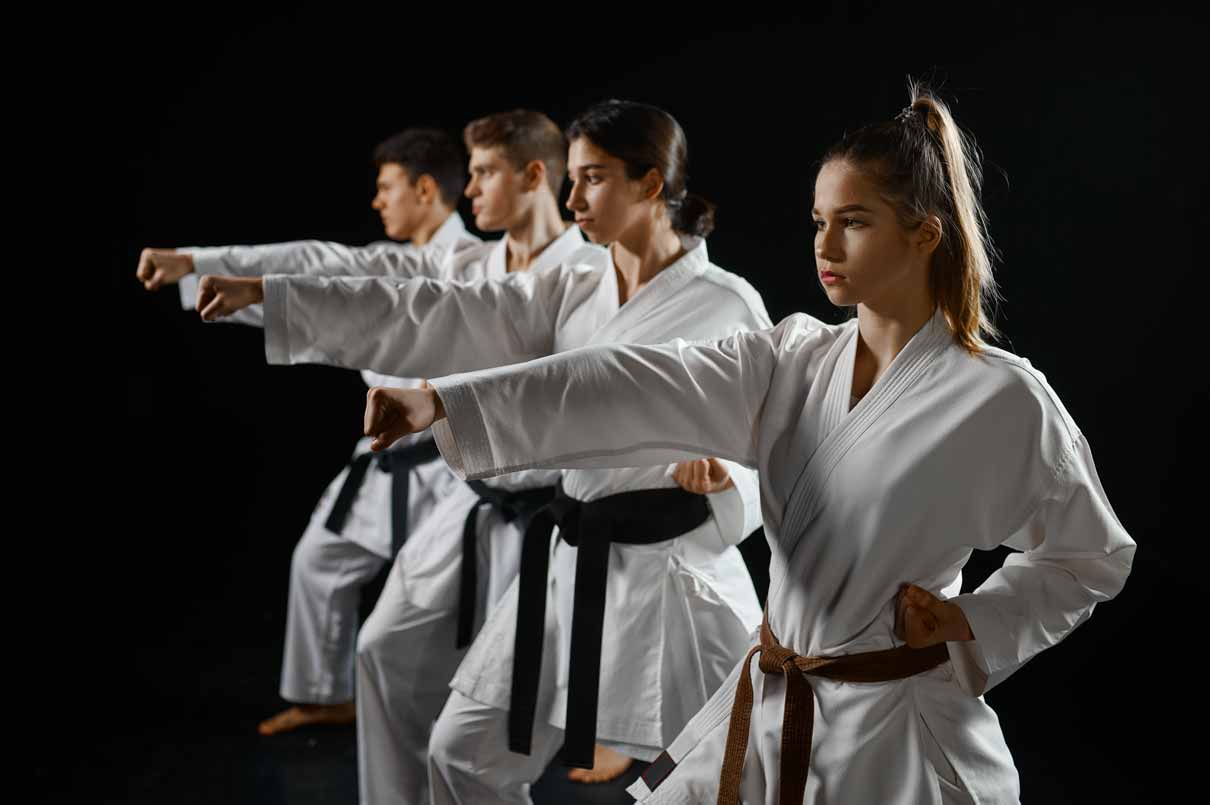
A hundred years of not throwing the first punch.
AFSKSA carries Gichin Funakoshi's name. That is not decoration. It commits us to how he taught, which is the reason this dojo looks the way it does.
Gichin Funakoshi brought karate from Okinawa to mainland Japan in 1922, and spent the rest of his life insisting it was not a way to hurt people.
He wrote under the pen name Shoto, meaning pine waves, after the sound of wind through the trees near his home. His students called the hall he taught in Shotokan, the hall of Shoto, and the name stuck to the style itself.
The Association of Funakoshi Shotokan Karate SA teaches in that line. It is led by Hanshi Selvan Govender, an 8th Dan black belt. The Broadlands dojo opened in January 2026 and is the newest room in it.
There is no first attack in karate.
Karate ni sente nashi. Funakoshi’s best known line, carved on his memorial stone. Karate is defensive or it is not karate. That single idea is why a room full of people learning to strike is also the calmest room your child will sit in all week.
It is also, in five words, what we mean by discipline without intimidation.
The Dojo Kun
Five precepts, recited together at the end of every class. Beginners learn them in their first month and black belts still say them out loud.
Seek perfection of character
Be faithful
Endeavour
Respect others
Refrain from violent behaviour
Who teaches
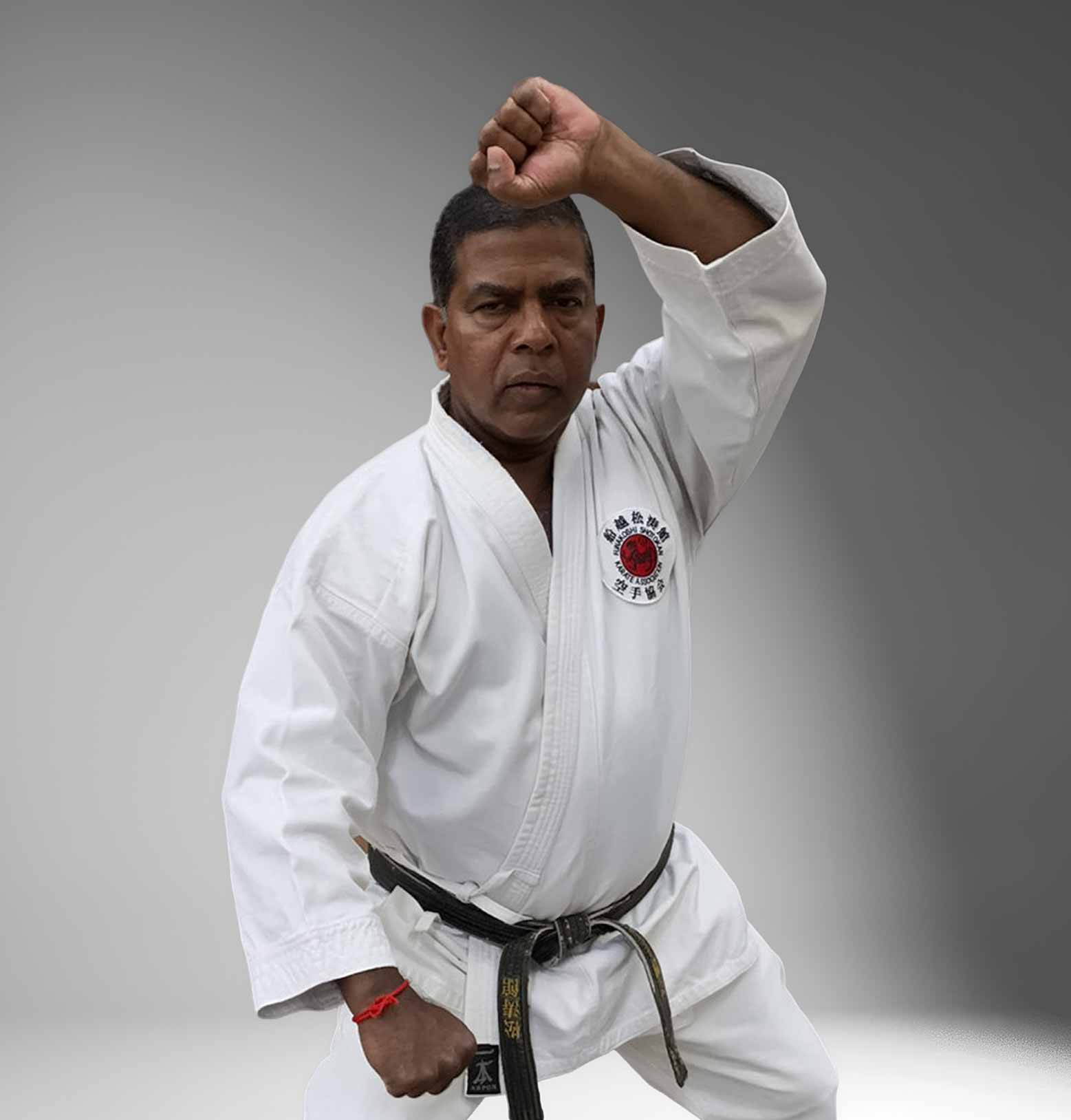
8th Dan Black Belt
HanshiSelvan Govender
President & Chief Instructor, AFSKSA
Hanshi Govender heads the Association of Funakoshi Shotokan Karate SA. Every grading awarded at Broadlands carries his authority.
1st Dan Black Belt
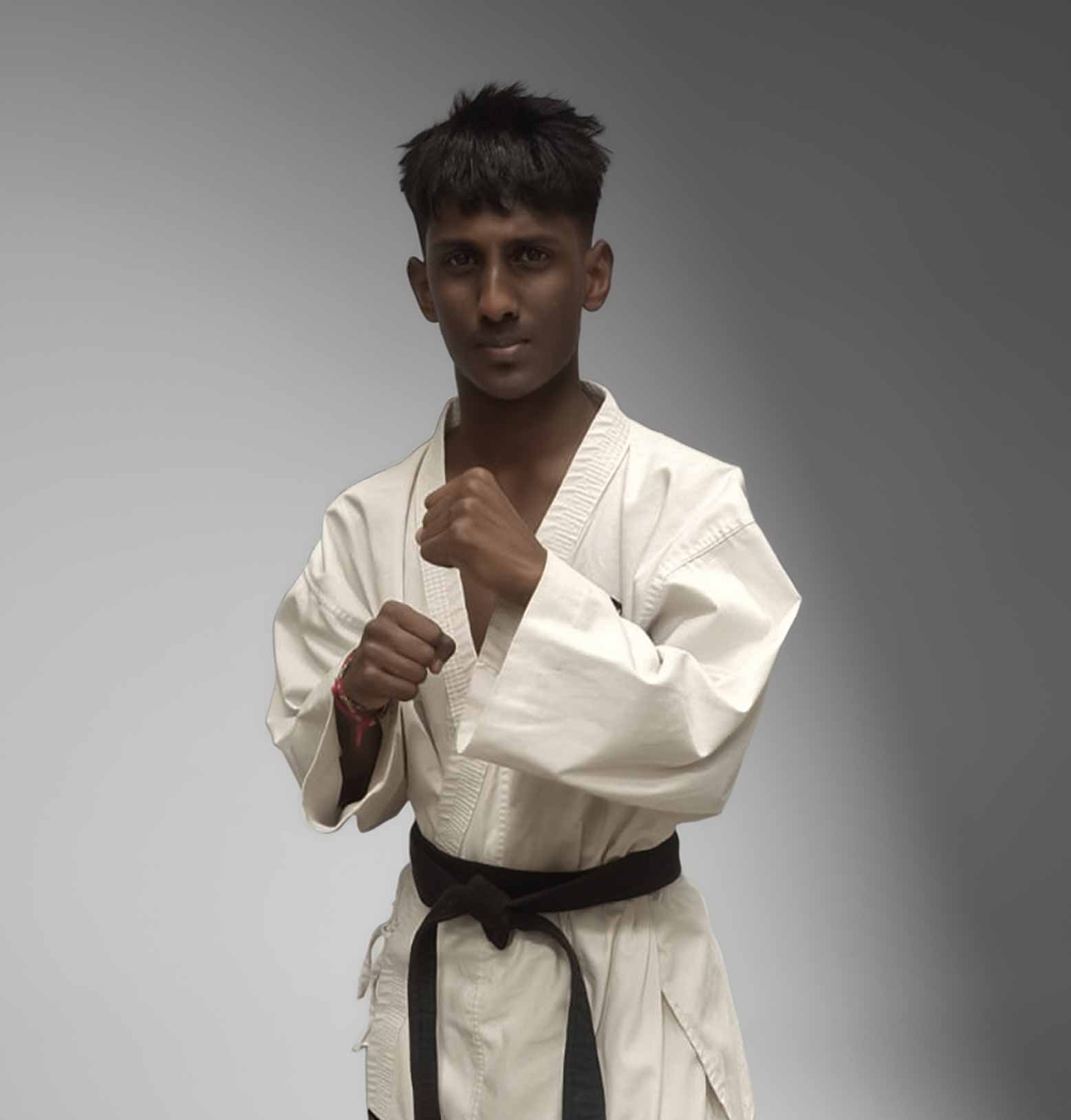
SenseiSaveshan Naidoo
Owner & Head Instructor, Broadlands
Sensei Naidoo owns and runs the Broadlands dojo, and teaches the Monday class himself. He has trained since he was five, and he is the one your child actually trains under, week after week.
Karate is more than a martial art; it is a way of life. Through dedicated training, discipline and perseverance, every student can develop the confidence and character needed to succeed both inside and outside the dojo.
Common questions
More about the art.
A few questions about Shotokan and where it comes from. The full set lives on the FAQ page.
Shotokan is a traditional Japanese style of karate founded by Gichin Funakoshi, and it is the most widely practised karate style in the world. It is known for strong, linear techniques, deep stances and a balance of three training pillars: kihon (basics), kata (forms) and kumite (sparring). AFSKSA Broadlands teaches Shotokan in the Funakoshi lineage.
AFSKSA is the Association of Funakoshi Shotokan Karate SA, a South African Shotokan karate association led by its president, Hanshi Selvan Govender, an 8th Dan black belt. The Broadlands dojo in Mount Edgecombe operates under AFSKSA and follows its syllabus, grading standards and code of conduct.
Shotokan is characterised by long, deep stances, powerful linear techniques and a strong emphasis on kata, whereas styles like Goju-Ryu use more circular movements and Kyokushin emphasises full-contact fighting. Shotokan is also the most widely recognised style internationally, with gradings and ranks respected across most countries.
Yes, Shotokan teaches practical striking, blocking and evasion skills alongside awareness and composure under pressure. Just as importantly, consistent training builds the confidence and calm that help you avoid dangerous situations in the first place. Effective self-defence takes consistent training over time, not a six-week shortcut.
Kihon, kata and kumite are the three pillars of Shotokan training. Kihon means basics: stances, blocks, punches and kicks. Kata are set sequences of techniques performed against imaginary opponents, preserving the art's core principles. Kumite is partnered sparring, introduced gradually and with controlled contact as students advance.
"Osu" (pronounced "oss") is a term used in many karate dojos to show acknowledgement, respect and perseverance. It combines "yes, Sensei", "I understand" and "I will push through". Usage varies between organisations, and your instructor will guide you on the etiquette used at AFSKSA Broadlands.