Everything a parent asks before the first class.
Karate, belts, fees and etiquette, answered plainly. If yours is not here, phone us or come and watch a Monday class.
Getting started
Your first class at AFSKSA Broadlands covers a warm-up, then basic stances, blocks, punches and kicks (kihon), taught step by step at a beginner's pace. No experience is needed and nobody is thrown in the deep end. You train alongside the class while Sensei guides you individually. Most beginners are surprised by how welcoming and structured the environment is.
Wear comfortable exercise clothing. A t-shirt and shorts or tracksuit pants are perfect. Karate is trained barefoot, so no special shoes are needed. You do not need a karate uniform (gi) for your first classes. Once you decide to continue, the dojo will help you order one.
No, karate builds your fitness, so you do not need to be fit before you start. Classes are structured so that every student works at their own pace, and strength, flexibility and cardio develop naturally through regular training. Beginners of all fitness levels are welcome at AFSKSA Broadlands.
No, adults of any age can start karate and progress meaningfully. Shotokan karate emphasises technique, control and consistent practice over raw athleticism, which makes it well suited to adults starting later in life. Many karateka begin in their 30s, 40s and beyond and go on to earn black belts.
You can join AFSKSA Broadlands at any time. There is no fixed intake period. New students are integrated into the class and taught the fundamentals from their first session, regardless of when in the year they start.
To enrol, contact the dojo on 079 061 7956, 064 637 2829, 073 620 3502, message us on Facebook at AFSKSA Broadlands, or simply come through on a Monday evening at 18h00. You will complete a short enrolment form and can begin training immediately.
Kids & parents
No, karate reduces aggression rather than causing it. Traditional Shotokan training is built on discipline, respect and self-control, and children are taught that their karate may only ever be used in self-defence. Our motto at AFSKSA Broadlands is "Discipline, Without Intimidation". Most parents notice their child becomes calmer, more focused and better at managing frustration.
Yes, karate helps bullied children primarily by building the confidence and self-esteem that make them less likely targets. Children also learn awareness, verbal boundary-setting and age-appropriate self-defence, always with the emphasis on avoiding conflict. Instructors encourage children to speak to parents and teachers about bullying rather than settle it physically.
Yes, the structure, routine and physical outlet of karate suit high-energy children very well. Classes follow clear, repeated patterns with immediate feedback, and children earn visible progress through the belt system, which keeps them motivated. Many parents report improved concentration and self-regulation at school after a few months of training.
Yes, karate is one of the safer and more controlled physical activities for children when it is taught by a qualified instructor. Techniques are taught progressively, contact is strictly controlled and supervised, and classes at AFSKSA Broadlands run under the syllabus and safety standards of the Association of Funakoshi Shotokan Karate SA.
Karate teaches children discipline, respect, perseverance, focus and confidence. The dojo reinforces goal-setting through the belt system, courtesy through etiquette, and resilience through gradual challenge. These habits carry over into schoolwork, sport and home life, which is why so many parents choose karate over other activities.
Yes, shy children often thrive in karate precisely because the environment is structured and predictable. There is no pressure to perform in front of others early on. Children progress at their own pace and build confidence through small, repeated successes. Many formerly shy students grow into the most confident members of the dojo.
Classes in Mount Edgecombe
AFSKSA Broadlands offers traditional Shotokan karate classes at Dream Padel Broadlands, 4 Broadmill Park, 6 Mountview Close, Mount Edgecombe. The dojo runs under the Association of Funakoshi Shotokan Karate SA and welcomes beginners from Mount Edgecombe and the surrounding areas, including uMhlanga, Cornubia, Phoenix and Verulam.
Classes are held on Mondays, 18h00 to 19h00 at Dream Padel Broadlands in Mount Edgecombe.
Classes are taught by Sensei Saveshan Naidoo, a 1st Dan black belt, under the Association of Funakoshi Shotokan Karate SA, which is led by Hanshi Selvan Govender, an 8th Dan black belt. Sensei Naidoo runs the Monday class at Dream Padel Broadlands and teaches the AFSKSA syllabus.
Contact AFSKSA Broadlands on 079 061 7956, 064 637 2829, 073 620 3502, or find us on Facebook at AFSKSA Broadlands. You are also welcome to visit on a Monday evening at 18h00 and speak to Sensei in person.
Fees & equipment
To start, you need nothing beyond comfortable exercise clothes, because karate is trained barefoot. Once you commit to training you will need a karate gi (uniform) and a white belt. As you progress to sparring, a mouthguard and hand mitts are required.
Belts & grading
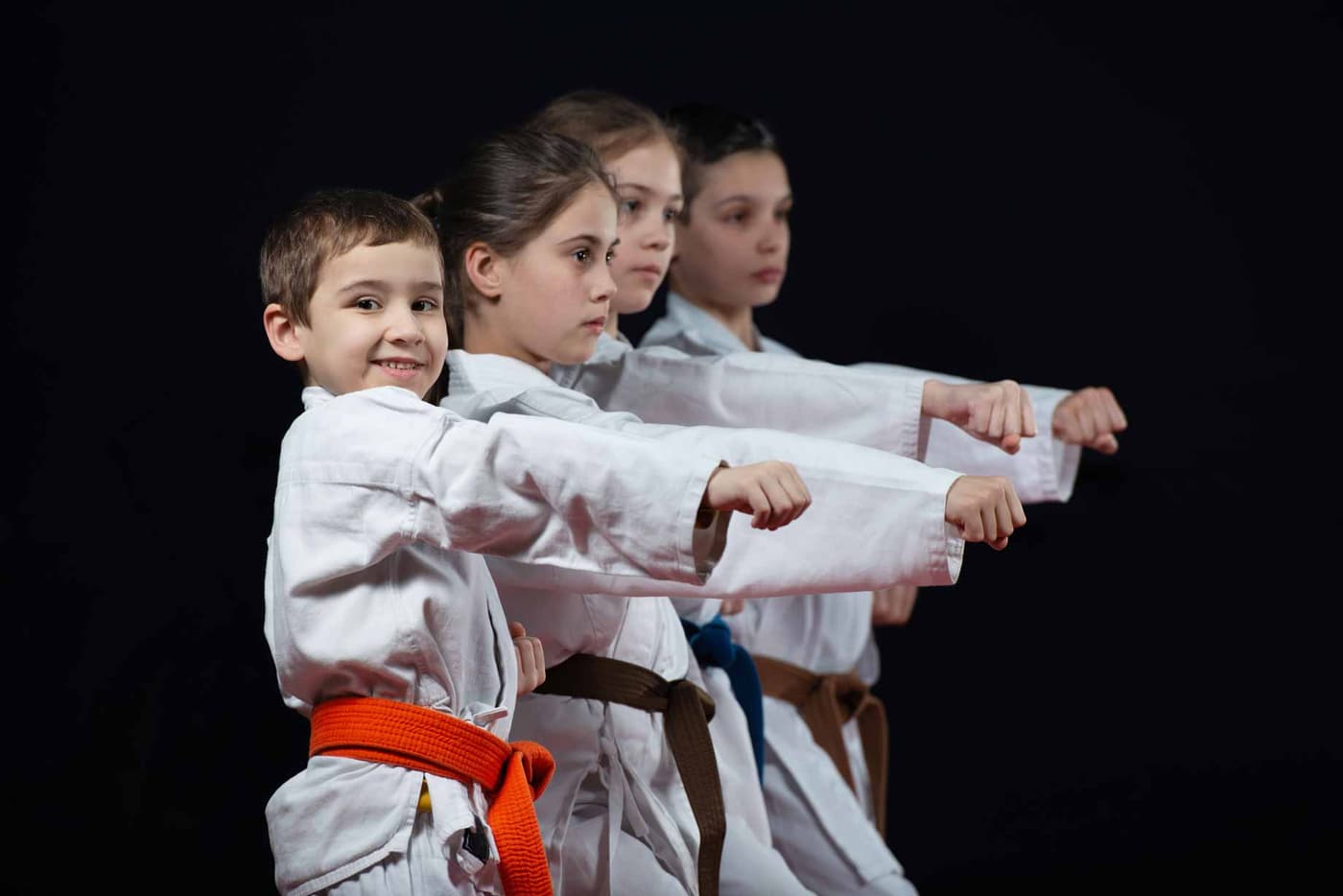
Karate uses a system of coloured belts to mark a student's progress. Students begin at white belt and move through the kyu (coloured belt) ranks toward brown belt, after which they may test for Shodan, the 1st Dan black belt. Each grading examines the student's kihon, kata and kumite at that level.
Most students take around 7 to 8 years of consistent training to reach black belt (Shodan) in Shotokan karate, training two or more times per week. The exact time depends on training frequency, dedication and your association's grading standards. There are no shortcuts to a legitimate black belt.
At a grading, students demonstrate the kihon (basic techniques), kata and, at higher levels, kumite required for their next rank, in front of a grading examiner. Gradings are formal but supportive occasions, and students are only put forward when their instructor believes they are ready to pass.
Yes, it is possible to fail a grading, but it is uncommon because instructors only put students forward when they are ready. If a student does not pass, they receive feedback on what to improve and grade again at the next opportunity. The process is designed to maintain standards, not to punish.
No, a black belt does not mean you have mastered karate: Shodan, the first black belt rank, literally means "first step". A black belt signifies that you have mastered the fundamentals and are ready to begin the deeper study of karate. Beyond Shodan lie further Dan ranks. AFSKSA's president, Hanshi Selvan Govender, holds the rank of 8th Dan.
Training & fitness
Beginners progress well training once or twice a week, and consistency matters far more than volume. AFSKSA Broadlands currently trains on Mondays, 18h00 to 19h00, and students are encouraged to practise their kihon and kata at home between classes.
Yes, a karate class is a full-body workout combining cardio, strength, flexibility, balance and coordination. Because you are learning skills rather than counting reps, most students find it far easier to stay consistent with karate than with gym training, and consistency is what produces real fitness results over time.
Yes, regular karate training burns significant energy and builds lean muscle, which supports healthy weight loss alongside sensible eating. More importantly, the skill progression and the dojo community keep people training consistently for years, and that is where sustainable results come from.
Yes, karate is an excellent martial art for women, combining practical self-defence, fitness and confidence in a respectful, controlled training environment. Shotokan techniques rely on speed, timing and body mechanics rather than size or brute strength, and women train and grade to black belt on exactly the same syllabus as men.
Sparring (kumite) is introduced gradually and is always controlled and supervised. Beginners start with pre-arranged partner drills long before any free sparring. Nobody is thrown into sparring before they are technically and mentally ready.
In most cases yes, karate training can be adapted to accommodate injuries and many health conditions, and you should tell your instructor about any condition when you enrol. If you have a significant medical condition, consult your doctor before starting any new physical activity, then train at the pace that suits your body.
About Shotokan
Shotokan is a traditional Japanese style of karate founded by Gichin Funakoshi, and it is the most widely practised karate style in the world. It is known for strong, linear techniques, deep stances and a balance of three training pillars: kihon (basics), kata (forms) and kumite (sparring). AFSKSA Broadlands teaches Shotokan in the Funakoshi lineage.
AFSKSA is the Association of Funakoshi Shotokan Karate SA, a South African Shotokan karate association led by its president, Hanshi Selvan Govender, an 8th Dan black belt. The Broadlands dojo in Mount Edgecombe operates under AFSKSA and follows its syllabus, grading standards and code of conduct.
Shotokan is characterised by long, deep stances, powerful linear techniques and a strong emphasis on kata, whereas styles like Goju-Ryu use more circular movements and Kyokushin emphasises full-contact fighting. Shotokan is also the most widely recognised style internationally, with gradings and ranks respected across most countries.
Yes, Shotokan teaches practical striking, blocking and evasion skills alongside awareness and composure under pressure. Just as importantly, consistent training builds the confidence and calm that help you avoid dangerous situations in the first place. Effective self-defence takes consistent training over time, not a six-week shortcut.
Kihon, kata and kumite are the three pillars of Shotokan training. Kihon means basics: stances, blocks, punches and kicks. Kata are set sequences of techniques performed against imaginary opponents, preserving the art's core principles. Kumite is partnered sparring, introduced gradually and with controlled contact as students advance.
"Osu" (pronounced "oss") is a term used in many karate dojos to show acknowledgement, respect and perseverance. It combines "yes, Sensei", "I understand" and "I will push through". Usage varies between organisations, and your instructor will guide you on the etiquette used at AFSKSA Broadlands.
Karate made its Olympic debut at the Tokyo 2020 Games, and sport karate continues to be contested worldwide under World Karate Federation (WKF) rules. Shotokan is the style most closely associated with WKF competition formats.
Etiquette & culture
Bowing (rei) is a sign of respect for the dojo, your instructor, your training partners and the art itself. Students bow when entering and leaving the dojo, and before and after partner work. It has no religious meaning. It is the martial arts equivalent of a handshake, and it frames every class in mutual respect.
Core dojo etiquette includes arriving on time, bowing when entering and leaving the dojo, addressing the instructor as "Sensei", keeping your gi clean, removing jewellery before training, and training with control and respect for your partners. Your instructor will teach you the rest. Beginners are never expected to know the etiquette in advance.
No, but you will naturally pick up karate's Japanese vocabulary as you train. Techniques, stances and commands are traditionally called in Japanese, for example "mae geri" for front kick, which keeps the art consistent worldwide. Within a few weeks the terminology becomes second nature, and instruction is always explained in English.
Still stuck
The best answer to most of these is an hour on the side of the mat.
Come and watch a class on a Monday, or phone us on 079 061 7956. No booking needed.